Temporary At-Home Dental Fixes: What Helps and What Can Make It Worse
Temporary at-home dental fixes can buy you time, comfort, or protection until you are seen. They should not be treated as home treatment for the underlying problem, because many dental emergencies get worse when pain relief delays diagnosis or when people try improvised repairs that irritate the tooth and gums.
Home triage in brief
- Good temporary care is simple, gentle, and short term: rinse, protect the area, control swelling, and avoid making the tooth harder to treat.
- Bad temporary care often involves glue, aspirin on the gums, aggressive scraping, very hot compresses, or pushing damaged teeth around.
- A chipped tooth, toothache, lost filling, or broken temporary can sometimes wait for an urgent dental visit. Swelling, fever, uncontrolled bleeding, or trouble swallowing should move much faster.
- When in doubt, call a dentist, explain the symptoms clearly, and use home care only as a bridge.
A safer order of operations at home
Start by slowing the situation down. Rinse gently with lukewarm water, remove obvious food debris with floss if something is stuck, and look for swelling, bleeding, or a broken piece you can save. The ADA dental emergencies guide focuses on exactly this kind of first aid: protect the tooth, avoid extra trauma, and get professional care as soon as possible.
If there is swelling on the face, use a cold compress on the outside of the cheek rather than putting heat directly on the area. If there is a knocked-out permanent tooth, follow true dental emergency instructions right away instead of trying a casual home fix. Timing matters more there than it does for a rough edge or a lost filling.
- Rinse gently with water
- Use floss to remove trapped food, but do not dig with sharp tools
- Save any broken piece or restoration if you can find it
- Call the dental office and describe pain, swelling, trauma, and timing
What may help for common problems before the visit
For a toothache, the MedlinePlus toothache guide supports standard pain relief measures and early dental evaluation rather than home procedures. For a chipped tooth, cover sharp edges with orthodontic wax or sugar-free gum only if your dentist has advised that kind of short-term protection and only for the trip in, not as a long-term patch.
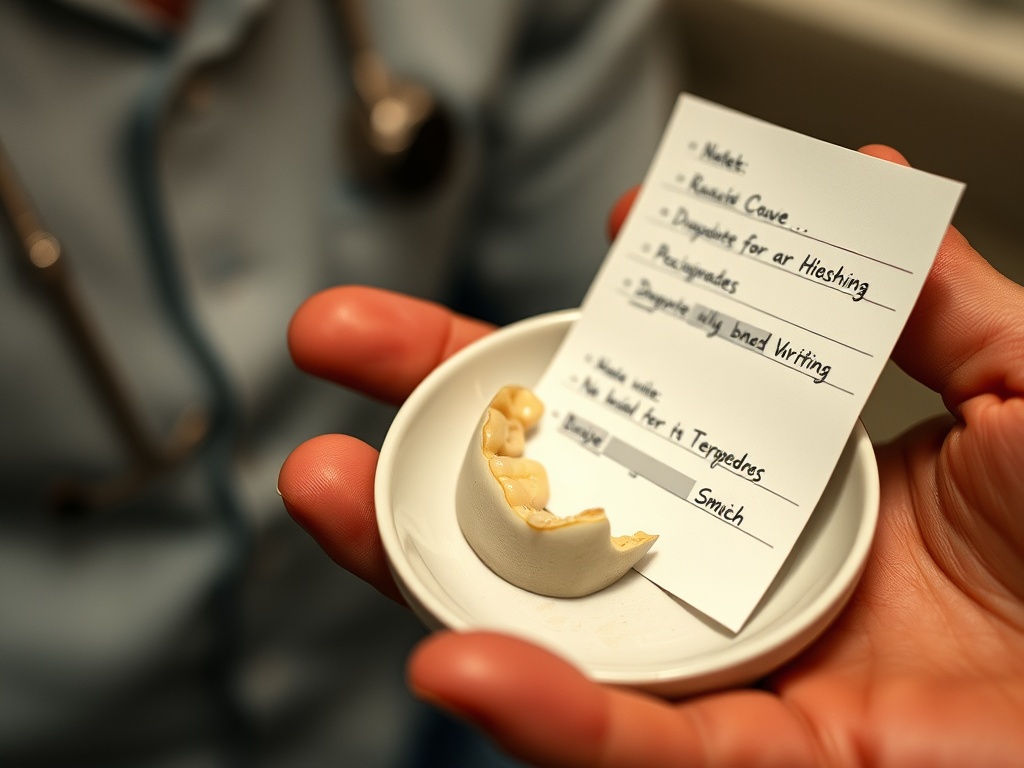
If a temporary crown comes off, keep it clean and bring it with you. If a filling is lost, avoid chewing on that side and keep the tooth clean. If you recently had an extraction and the pain gets worse instead of better, a dry socket is possible, and the MedlinePlus dry socket page makes clear that this needs dental treatment rather than repeated home rinses alone.
The home fixes that commonly backfire
Do not glue crowns or broken teeth in place with household adhesives. Do not place aspirin on the tooth or gums. Do not scrape under the gumline with metal objects. Do not keep testing the tooth with hot or cold foods to see if it is still sensitive. Each of those choices can irritate tissue or make the dentist's job harder.
People also get into trouble by turning a manageable problem into a delay. Temporary relief can hide a cavity, crack, infection, or gum abscess. The article on root canal vs extraction: which costs less now vs later? matters here because waiting can shrink the number of conservative options left on the table.
A practical step-by-step triage guide
Use this short framework: first, control the environment by rinsing and stopping extra trauma. Second, decide whether you are dealing with pain only, pain plus swelling, or trauma with a broken or displaced tooth. Third, protect the area and avoid chewing there. Fourth, call for professional advice instead of inventing the next step yourself.
- Pain only, no swelling: urgent dental appointment usually appropriate
- Pain plus swelling, fever, foul taste, or pus: same-day dental evaluation is safer
- Trauma, knocked-out tooth, uncontrolled bleeding, or difficulty swallowing: emergency care may be needed immediately
- Recent extraction pain that spikes after a brief calm period: ask specifically about dry socket
Home Care and Follow-Up for Temporary At-Home Dental Fixes
Routine urgent dental care is appropriate for toothache, a lost crown, a broken filling, a chipped edge, or sensitivity that keeps you from chewing comfortably. Move faster if you have facial swelling, fever, pus, worsening pain despite medication, a loose adult tooth after trauma, trouble opening your mouth, trouble breathing, or trouble swallowing. Parents arranging urgent care for a child may also want sedation dentistry for kids: questions parents should ask if anxiety or procedure length becomes part of the emergency plan.
That line matters because some problems are inconvenient while others can spread. Home care is a bridge, not a treatment plan.
Questions About Temporary At-Home Dental Fixes
For Temporary At-Home Dental Fixes, this part of Questions About Temporary At-Home Dental Fixes focuses on the symptom history, previous treatment, current medicines, and the result the patient values most while risks and alternatives are compared, with the same details verified after the examination is explained.
Clinical Checks for Temporary At-Home Dental Fixes
For Temporary At-Home Dental Fixes, this part of Clinical Checks for Temporary At-Home Dental Fixes focuses on confirmed findings, measurements, imaging, and health-history factors when home-care instructions are prepared, with the same details verified after the examination is explained. The clinician should also explain what remains uncertain and whether another test or specialist opinion would alter the plan for Temporary At-Home Dental Fixes when maintenance is discussed, using the examination and health history rather than a general assumption.
Comparing Options for Temporary At-Home Dental Fixes
For Temporary At-Home Dental Fixes, this part of Comparing Options for Temporary At-Home Dental Fixes focuses on benefit, limitations, durability, maintenance, timing, and total cost as the treatment sequence is documented, with the same details verified after the examination is explained. The clinician should also explain how each choice preserves tooth structure or tissue and what backup treatment may be needed for Temporary At-Home Dental Fixes before the next appointment is booked, using the examination and health history rather than a general assumption.
What to bring to the urgent visit
Bring any broken tooth fragment or restoration, a list of the medications you took, and a clear timeline of when the pain started or what caused the injury. Dentists can usually help faster when the story is specific and the temporary measures have been simple.
Use at-home care to protect the area, then let the dental visit take over before the problem gets more complicated.
Home Care and Follow-Up for Temporary At-Home Dental Fixes During Initial Planning
For Temporary At-Home Dental Fixes, this part of Home Care and Follow-Up for Temporary At-Home Dental Fixes During focuses on safe cleaning tools, foods, products, and daily techniques while the expected outcome is clarified, with the same details verified after the examination is explained. The clinician should also explain which changes are expected and which should prompt an earlier call for Temporary At-Home Dental Fixes before consent is finalized, using the examination and health history rather than a general assumption.
Who May Benefit From Temporary At-Home Dental Fixes
When considering Temporary At-Home Dental Fixes: What Helps and What Can Make It Worse, ask how smoking, medicines, grinding, hygiene, or earlier dental work could change predictability. Before proceeding with Temporary At-Home Dental Fixes: What Helps and What Can Make It Worse, identify the factor that would make the dentist postpone care or recommend another approach before consent is finalized.